Case study / Web development
Building a scalable, quote-first content system for auto detailing
- Client
- NorthLane Auto Detailing
- Platform
- Custom
- Live site
- northlaneautodetailing.com
01/ Results
The results
- Public sitemap URLs
- 33
- Observed 2026-09-30 · XML sitemap
- Service-detail pages
- 12
- Observed 2026-09-30 · XML sitemap and services inventory
- Evergreen resource articles
- 10
- Observed 2026-09-30 · XML sitemap
02/ Challenge
The challenge
Auto detailing is visually persuasive, but the service decision itself is conditional. Vehicle size, interior condition, paint defects, access, protection goals, add-ons, and whether the request covers one vehicle or a fleet can all change the right scope. Publishing a short package list without that context risks unclear expectations. Publishing a large service catalogue without a strong content system creates a different problem: duplicated language, inconsistent quote paths, and pages that drift apart over time.
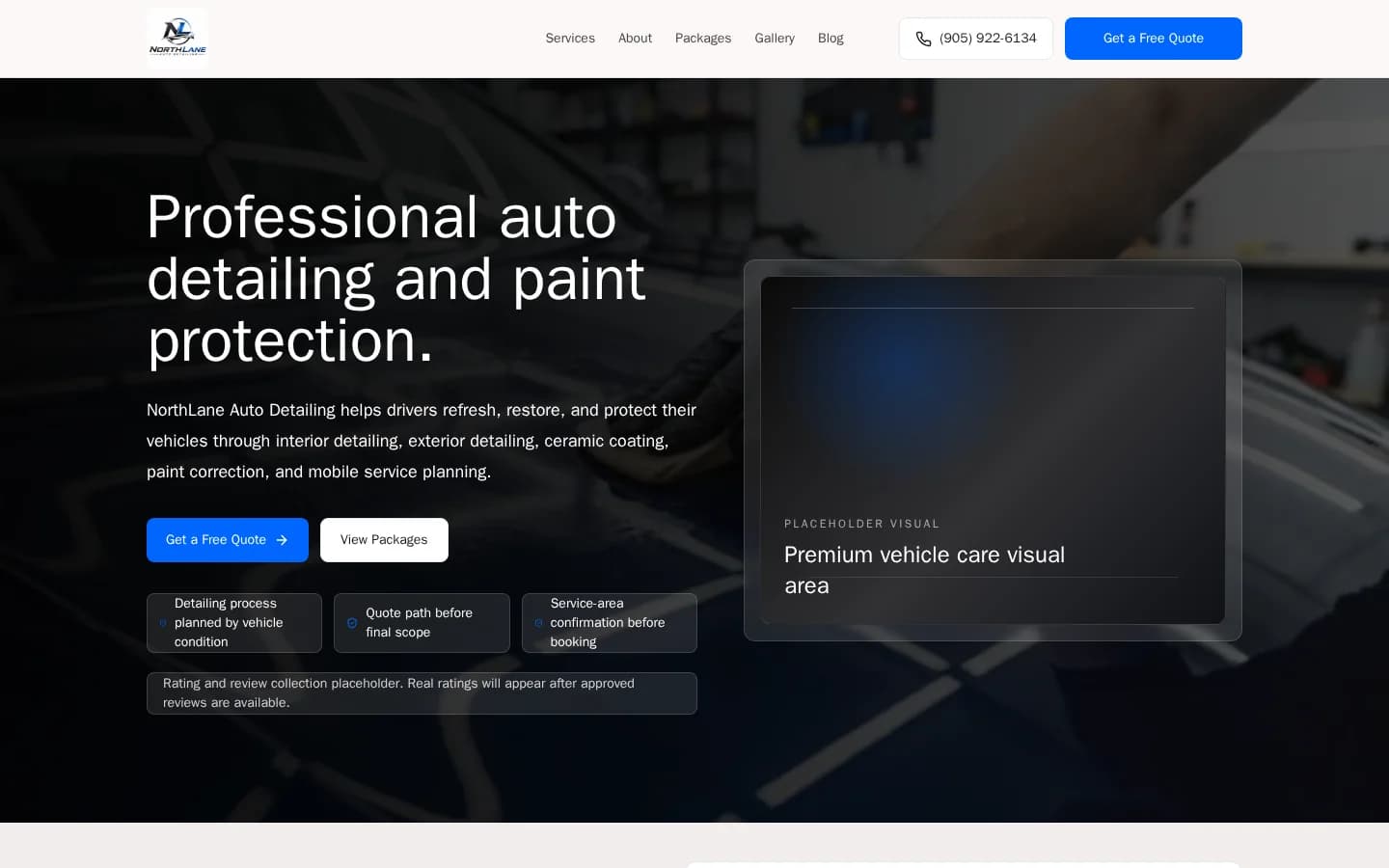
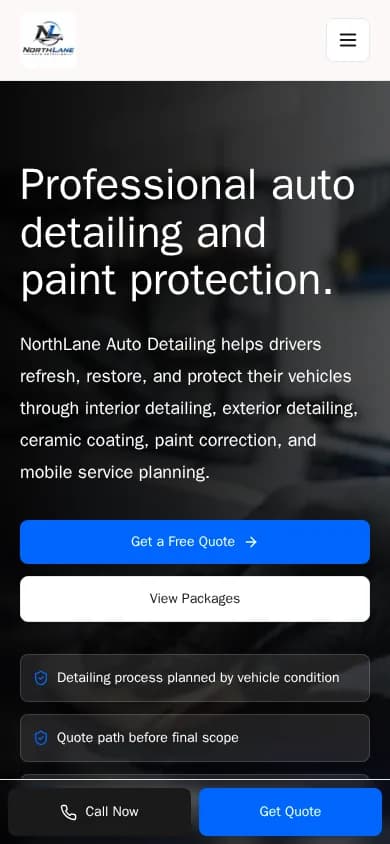
The delivered site treats those constraints as an information-architecture and product-design problem. Twelve dedicated service pages connect to a shared services overview, four package starting points, comparison content, FAQs, and ten evergreen articles. A five-step quote form gathers customer, vehicle, service, condition, scheduling, and consent details before final scope is promised. Reusable content connects service pages, package cards, calls to action, forms, footer links, and search-focused resources.
The public experience also distinguishes verified facts from placeholders, leaving reviews, local details, pricing, and gallery proof unclaimed until source material is approved.
03/ Approach
Our approach
Model the service catalogue once
The services overview states that shared service content powers cards, detail pages, footer links, and quote choices. This creates a consistent vocabulary across twelve service-detail journeys and reduces editorial drift.
Design around condition-led quoting
Packages act as starting points rather than fixed promises. The quote flow gathers vehicle size, requested services, condition, add-ons, pickup needs, schedule, location, notes, and consent so the final conversation begins with useful context.
Build a connected discovery system
Service pages, comparison content, package guidance, FAQs, gallery structure, service-area content, and ten resource articles give visitors multiple entry points while returning them to the same quote journey.
Make evidence discipline visible
The live copy labels unconfirmed reviews, photos, prices, service areas, business details, and proof as placeholders. That preserves the page structure without presenting invented claims as finished evidence.
04/ Gallery
Inside the build
Tech stack
- Next.js
- Vercel